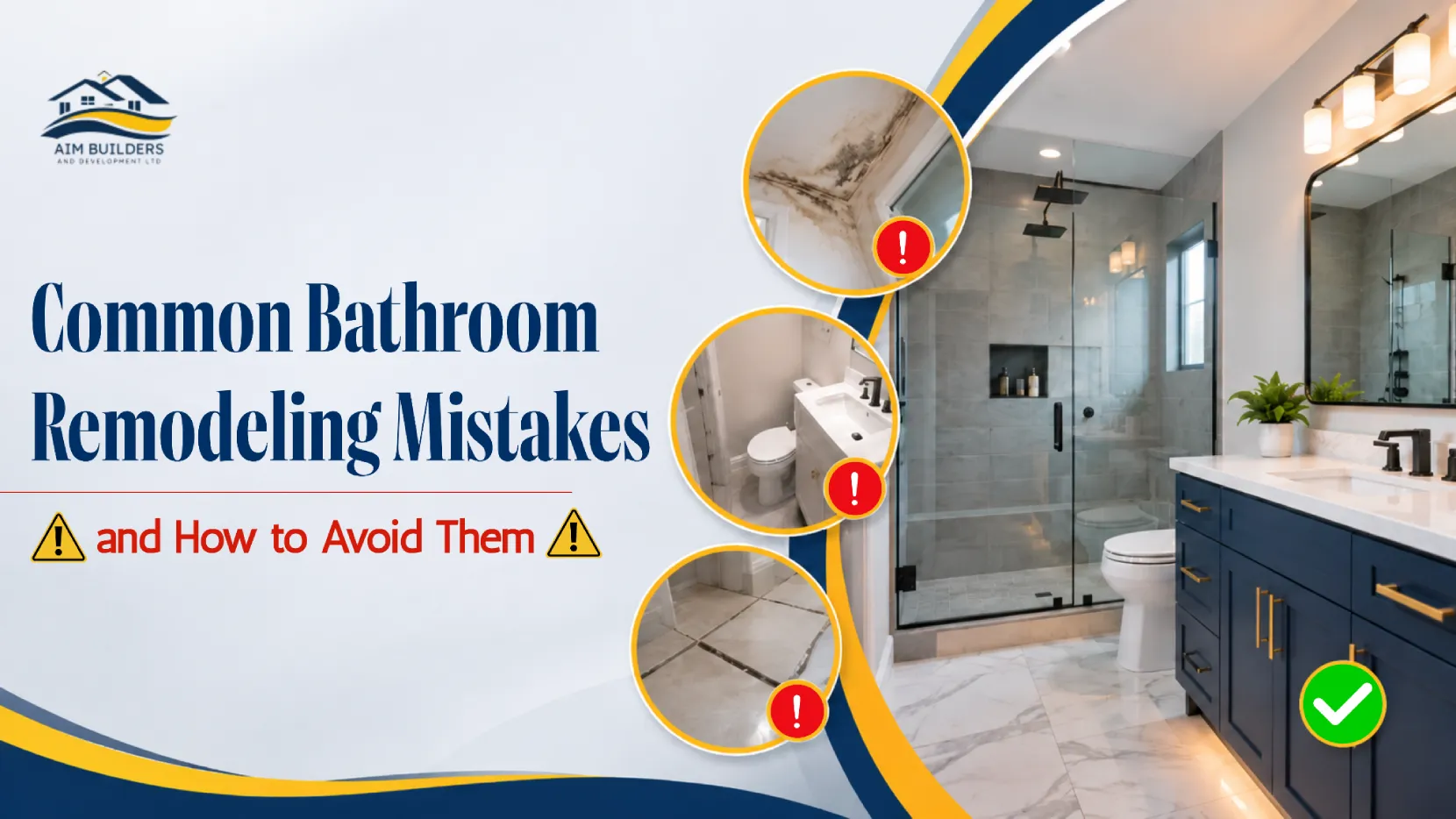
Common Bathroom Remodeling Mistakes and How to Avoid Them
A bathroom remodel should leave you with a space that looks better and functions better. But what happens when the new tiles start showing signs of water damage, the shower doesn't drain properly, or the bathroom never seems to dry out? These problems can turn a bathroom remodel into a costly project that requires additional repairs.
In many cases, the trouble starts with decisions made before or during construction. Overlooking waterproofing, rushing the planning stage or choosing unsuitable materials can affect the bathroom long after the work is finished.
Fortunately, these mistakes are preventable with proper planning and the right approach. In this guide, we'll cover common bathroom remodeling mistakes and explain how to avoid them during your next bathroom remodeling in Calgary.
What Are the Most Common Bathroom Remodeling Mistakes?
The most common bathroom remodeling mistakes include poor space planning, inadequate waterproofing, insufficient ventilation, incorrect plumbing decisions and choosing materials that are difficult to maintain. Underestimating costs and hiring contractors without checking their work can also create problems.
Knowing these issues before starting a bathroom remodel in Calgary can help homeowners make better decisions and avoid preventable repairs. Let's look at these common mistakes in detail:
1. Not Planning the Bathroom Layout Properly
A bathroom may have beautiful finishes and modern fixtures but still feel uncomfortable if the layout is poorly planned. Fixtures that are too large, narrow walkways and awkward door placements can make everyday activities difficult.
For example, a vanity drawer may not open fully because it hits the toilet or shower enclosure. A bathroom door may also interfere with access to the sink or other fixtures.
When planning a completely new bathroom layout, consider the work needed to make those changes possible. Demolition may reveal damaged flooring, wall framing or plumbing that needs attention before you can install new fixtures. These conditions can affect the final layout and add reconstruction work to the project.
How to Avoid It:
Measure the available space before selecting fixtures. Consider how much clearance is needed around the toilet, vanity, shower and bathtub. Check that doors and drawers can open without hitting other fixtures.
Keep the plumbing locations in mind when planning the layout. Moving a toilet or shower can involve additional plumbing work, so consider whether the change will make enough difference to justify the expense. Having the bathroom assessed before finalizing the design can help avoid unexpected changes during construction.
2. Setting an Unrealistic Bathroom Remodeling Budget
A common budgeting mistake is focusing on visible materials and fixtures. The actual cost of a bathroom remodel also includes demolition, debris disposal, surface preparation, plumbing, electrical work, waterproofing and installation.
Unexpected problems can increase the total cost. For example, removing old flooring may reveal a damaged subfloor that needs repair before new tiles or a bathtub can be installed. These reconstruction costs can add to the original estimate, especially in older bathrooms.
How to Avoid It:
Prepare a budget that accounts for both visible finishes and construction work. Ask your contractor for a detailed estimate that explains what is included and identifies any potential additional costs.
It is also sensible to keep around 10% to 20% of the budget aside as a contingency. This provides some flexibility if hidden damage, plumbing issues or other unexpected work is discovered during construction.
Avoid spending the entire budget on premium fixtures and finishes before accounting for the work needed to install them properly.
If you're unsure about the scope of your project, our guide explaining the difference between bathroom remodelling and renovation can help clarify which type of work your bathroom may require.
3. Overlooking Proper Waterproofing
Waterproofing plays an important part in a bathroom remodel. Tiles and grout provide a finished surface, but they should not be treated as the only protection against moisture. Water can pass through grout joints and small gaps, eventually reaching the materials behind the tiled surface.
Over time, this can damage the wall structure, subfloor and surrounding materials. It may also create conditions for mould growth.
How to Avoid It:
Use a suitable waterproofing membrane in shower areas and other locations exposed to regular water. Pay attention to corners, wall joints, plumbing openings and connections around the shower base.
The surface must also be properly prepared before waterproofing and tile installation. Check that the shower floor has the correct slope towards the drain so water doesn't collect in low spots.
Don't cut costs by skipping preparation or using unsuitable products. Proper waterproofing is much easier to complete during construction than to repair after the bathroom is finished.
4. Ignoring Bathroom Ventilation Requirements
Bathrooms produce a considerable amount of moisture, particularly during showers and baths. Without adequate ventilation, that moisture can settle on walls, ceilings, mirrors and cabinetry.
Over time, poor ventilation can contribute to mould, peeling paint, damaged finishes and persistent condensation. This can become an ongoing problem during Calgary's colder months when homeowners tend to keep windows closed.
How to Avoid It:
Install an exhaust fan that is appropriately sized for the bathroom. Make sure the fan has suitable ductwork that carries moist air outdoors rather than into an attic or another enclosed space.
The fan should also be positioned to remove moisture effectively. Choose a model that operates quietly enough for regular use, as an excessively noisy fan may discourage people from turning it on.
Natural ventilation through a window can help, but it should not replace required mechanical ventilation. Check that the ventilation arrangement meets applicable building requirements.
5. Moving Plumbing Without Considering the Cost and Complexity
Moving a toilet, bathtub, sink or shower can create a more convenient bathroom layout. However, relocating plumbing isn't always as straightforward as it looks.
The existing water supply lines, drainage pipes and vent connections may need adjustment. The amount of work depends on the current plumbing arrangement and the new fixture locations.
This is worth considering in older Calgary homes, where existing pipes may also need inspection or replacement. Discovering damaged connections or outdated plumbing after demolition can affect both the budget and remodel schedule.
How to Avoid It:
Have the existing plumbing assessed before finalizing the design. Discuss the cost and work involved in relocating fixtures with your contractor.
If the existing layout works, keeping the main plumbing connections in place can help control costs. If relocation is necessary, plan the changes before you close the walls and floors.
6. Choosing Bathroom Materials Based Only on Appearance
A material that looks attractive in a showroom may not be the best choice for a bathroom. Floors, shower walls, countertops and cabinets are exposed to regular moisture, cleaning products and everyday wear.
Highly polished floor tiles, for example, can become slippery when wet. Some natural stone surfaces also require more maintenance and sealing than homeowners expect.
How to Avoid It:
Consider the material's performance as well as its appearance.
- Floor tiles: Choose tiles with suitable slip resistance for wet areas. Smaller mosaic tiles create more grout joints and offer flexibility when sloping a shower floor.
- Wall tiles: Select durable materials that are suitable for bathroom and shower applications.
- Countertops: Consider how well the surface handles moisture, stains and regular cleaning.
- Cabinetry: Choose bathroom-suitable materials and finishes that can handle humidity changes.
Ceramic and porcelain tiles are common bathroom choices because they are durable and relatively easy to maintain. The right option depends on where the material is installed and how the bathroom will be used.
For inspiration when selecting finishes, explore these bathroom tile trends for Calgary homes in 2026–2027.
7. Forgetting About Storage and Practical Lighting
Storage and lighting can easily become secondary concerns when most of the remodel planning focuses on tiles, fixtures and colours. However, these details have a direct effect on how comfortable the bathroom is to use.
Insufficient storage can leave toiletries, towels and personal care products scattered across the vanity. Poor lighting can also make everyday tasks such as shaving, applying makeup and getting ready more difficult.
How to Avoid It:
Plan storage before choosing the vanity and finalizing the layout. Deep vanity drawers, medicine cabinets, recessed shower niches and additional towel storage can help keep frequently used items organized.
Lighting should also serve different purposes. General ceiling lights provide overall illumination, while suitable lighting around the mirror helps reduce shadows when using the vanity.
Consider moisture-rated fixtures where required. Combining practical storage with well-planned lighting makes the bathroom easier to use without taking up unnecessary space.
8. Starting Remodeling Without Understanding Permit Requirements
Not every bathroom update in Calgary requires a permit. However, homeowners can run into problems if they assume all remodel work is cosmetic.
The permit requirements depend on the work involved. Replacing an existing faucet or fixture generally does not require a plumbing permit. However, constructing, extending or altering a plumbing system does require one. New electrical wiring or changes to existing electrical circuits also require an electrical permit. Structural changes may also require a building permit.
How to Avoid It:
Check the applicable requirements with the City of Calgary before construction begins. Make sure you arrange the necessary permits for plumbing, electrical and structural work.
The City's homeowner electrical and plumbing permit guidelines explain which types of work require approval. Discuss permit responsibilities with your contractor so you both clearly understand who will submit applications and arrange inspections.
9. Hiring Bathroom Remodeling Contractors Based Only on Price
A low remodel quote can seem attractive, but the cheapest option may not include all the work your bathroom needs. Some estimates leave out important details such as surface preparation, waterproofing, plumbing adjustments or waste removal.
This can lead to unexpected charges once the project is underway. Poor workmanship can also create problems that cost more to correct later.
How to Avoid It:
Compare estimates based on the actual work included rather than the final price alone. Before hiring bathroom remodeling contractors, check their relevant experience, insurance coverage and previous projects. Ask questions about:
- The materials and waterproofing systems included in the estimate.
- The plumbing and electrical work required for the remodel.
- Project timelines and how unexpected repairs will be handled.
- Payment schedules, warranties and cleanup responsibilities.
Get the agreed scope of work in writing before construction begins. Clear expectations make the remodeling work much easier to manage and help you understand what you are paying for.
Give Your Bathroom a Fresh Start
Plan a bathroom that suits your space and daily needs with Aim Builders' professional bathroom remodeling services in Calgary.
Request a Bathroom Remodel Quote
Bathroom Remodeling Checklist: What to Confirm Before Construction
Planning a bathroom remodel involves several decisions that need to be finalized before construction begins. Before approving the design or starting demolition, Calgary homeowners should review the following details with their contractor.
| What to Confirm |
What to Discuss Before Construction |
| Final Layout and Measurements |
Confirm the exact positions and dimensions of the vanity, toilet, bathtub and shower. Check door swings, drawer openings and clearance around fixtures. |
| Existing Plumbing Condition |
Establish whether existing pipes, drains and connections can support the new fixtures or need repairs or relocation. |
| Waterproofing Details |
Identify the waterproofing system being used, the areas it will cover and how corners, joints and shower floor connections will be protected. |
| Ventilation Plan |
Confirm the exhaust fan capacity, duct route and outdoor discharge point. |
| Material Specifications |
Finalize tile types, flooring, countertops, cabinetry and fixtures. Check their suitability for bathroom conditions before ordering. |
| Complete Remodel Costs |
Review labour, materials, demolition, disposal, plumbing, electrical work and installation costs. Clarify how additional repairs will be priced. |
| Permits and Inspections |
Determine which permits and inspections apply to the planned work and who is responsible for arranging them. |
| Project Schedule and Responsibilities |
Agree on the construction timeline, material delivery dates, payment schedule and how unexpected delays or changes will be handled. |
Making these decisions in advance gives everyone a clear understanding of the work involved. It also reduces confusion, unexpected expenses and last-minute design changes during construction.
Plan Your Bathroom Remodel with the Right Team
A bathroom remodel is a significant investment, and planning decisions can affect how well the space serves your household for years. Taking time to consider the layout, materials, plumbing and waterproofing can help prevent problems and make the finished bathroom more practical.
An experienced team also helps keep these details in focus. At Aim Builders, we offer bathroom remodeling services in Calgary, including complete bathroom remodels, shower upgrades, bathtub installation, tile work and vanity installation. Each part of the remodel deserves careful attention, from surface preparation to selecting suitable finishes.
Make Your Bathroom Work Better
Upgrade your bathroom with practical layouts, quality finishes and carefully planned installations by Aim Builders.
Explore Bathroom Remodeling Services
Frequently Asked Questions
Poor planning is one of the most common mistakes in a bathroom remodel. Homeowners may overlook fixture spacing, storage, ventilation or plumbing requirements while focusing mainly on the appearance of the finished bathroom. These decisions can affect comfort, costs and long-term maintenance.
Overlooking water damage or installing an inadequate waterproofing system can become particularly expensive. Water can damage subfloors, walls and surrounding structures, requiring repairs and replacement of finished materials. Correcting these problems after installation can involve significant additional work.
Compare contractors based on relevant bathroom remodeling experience, insurance, previous work and the details included in their estimates. Ask about waterproofing, plumbing, material preparation, project timelines and warranties. A clear written agreement helps prevent misunderstandings once the remodeling work begins.
It depends on the scope of work. Replacing existing faucets and fixtures generally does not require a plumbing permit. However, altering or extending plumbing systems requires one. New wiring and changes to existing electrical circuits also require electrical permits. Structural changes may require a building permit.
A contingency of approximately 10% to 20% of the total bathroom remodeling budget is a reasonable planning allowance. This can help cover unexpected repairs, such as damaged subfloors, plumbing problems or water damage discovered during demolition.
A standard bathroom remodel takes around 3 to 6 weeks once construction begins. A cosmetic update involving new fixtures, paint and flooring may take less time, while a full remodel involving plumbing changes, electrical work, waterproofing and tile installation can take longer.
About the Author
Inderpal Singh is the founder of Aim Builders, a Calgary-based renovation company specializing in basement development and home renovation services. With years of experience in the construction industry, he helps homeowners transform their spaces with quality work, practical design, and project management you can trust.