10 Bathroom Tile Trends That Will Upgrade Calgary Bathrooms in 2026-2027
A tile can look perfect in a catalogue or magazine, yet feel completely wrong once it's in your bathroom. The colour, size, finish, and texture all affect how the space looks, feels, and functions.
A dark tile may make a small space feel even smaller; a glossy surface can become slippery when wet; and heavily textured tiles may look beautiful but require more effort to clean. The right tile needs to suit the bathroom's size, layout, and everyday use.
With so many options available, the challenge is finding a tile that suits both your style and the way you use your bathroom. So, which tile trends are worth considering for your space?
For homeowners planning bathroom renovations in Calgary we've rounded up 10 bathroom tile trends for 2026–2027 that combine current design with practical considerations for everyday bathrooms.
Quick Glance: Best Tiles for Bathroom Renovations in Calgary in 2026–2027
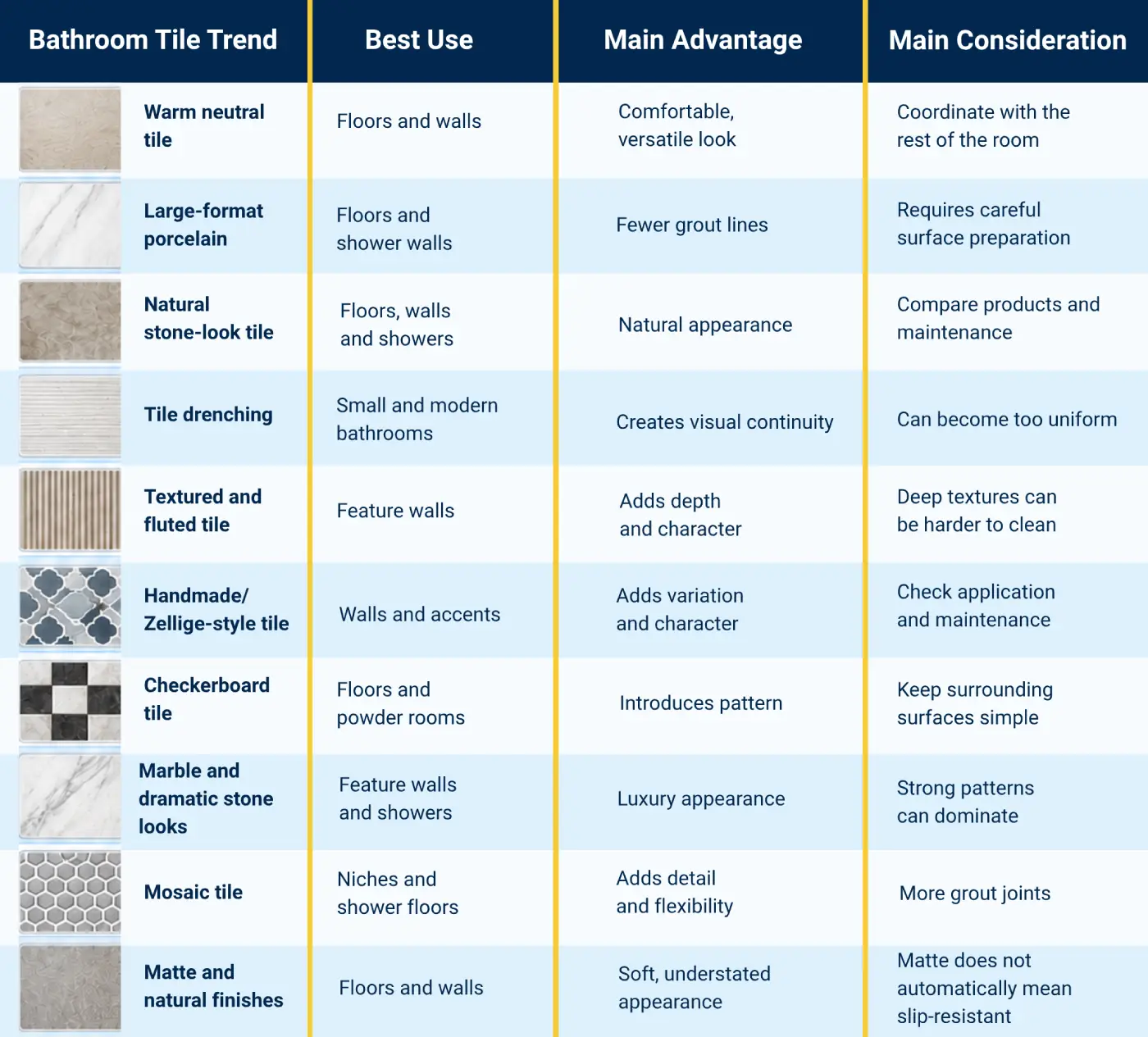
10 Bathroom Tile Ideas and Trends for Calgary Homes in 2026-2027
Different bathroom areas require different types of tile. Shower walls, bathroom floors, and shower floors each have specific requirements, especially for moisture, foot traffic, slip resistance, drainage, and slope. Whether you're renovating or refreshing your bathroom, here are the best bathroom tiles for Calgary homes in 2026-2027:
1. Warm Neutral Tiles
Warm neutral tile is one of the easiest ways to make a bathroom feel more comfortable and less clinical. Instead of relying entirely on cool grey or bright white, homeowners are choosing colours such as:
- Beige
- Cream
- Taupe
- Sand
- Warm white
- Soft brown
- Warm limestone tones
- Muted earthy greens
These colours work particularly well with natural wood vanities, brushed-metal fixtures, warm lighting and stone-look surfaces. For Calgary homeowners, it might be best to use a warm beige porcelain tile on the floor with a lighter cream tile on the walls. Add a natural wood vanity and warm lighting for a simple, comfortable design.
The advantage of warm neutrals is flexibility. They can work with both modern and traditional bathrooms without making the room feel overly trend-driven.
Best for: Floors, walls, shower walls and full-bathroom designs.
2. Large-Format Porcelain Tiles
Larger-format porcelain tiles remain a strong choice for homeowners who want a clean and modern bathroom.
Large tiles can reduce the number of grout lines and create a more continuous visual surface. This can be especially useful in smaller bathrooms where numerous grout lines can make the space look visually busy. This tile design is available in:
- Marble
- Limestone
- Travertine
- Slate
- Concrete
- Natural Stone
- Solid Colours
Some products are available in very large sizes, while more conventional formats such as 12 x 24 inches or 24 x 24 inches can also provide a relatively clean appearance.
However, it's important to note that bigger is not automatically better. Large tiles require careful planning. Uneven walls or floors can make installation more difficult, and the layout needs to account for corners, niches, drains, doors, and plumbing fixtures.
Best for: Shower walls, bathroom walls, and floors where the specific product is rated for the application.
3. Natural Stone-Look Tiles
Natural stone continues to influence bathroom design, but homeowners do not always need to use real stone throughout the room.
Porcelain and ceramic tiles can give the appearance of marble, travertine, limestone, slate, and other natural materials. For example, limestone-look porcelain can create a warm bathroom, while marble-look porcelain can give a more dramatic, luxurious appearance.
Natural stone itself can have specific cleaning, sealing, and maintenance requirements depending on the material and finish. A manufactured stone-look tile may have a different maintenance profile, so compare the exact products rather than assuming that every porcelain or natural stone surface performs the same way.
Best for: Bathroom floors, shower walls, full-height walls, and feature areas.
4. Tile Drenching
Tile drenching uses the same tile, or closely related tiles, across multiple surfaces instead of using a different material everywhere.
For example, one stone-look porcelain could be used across the bathroom floor and shower walls. The result is a more continuous visual field. This approach works particularly well in smaller bathrooms because using fewer materials can make the space feel more connected.
A warm stone-look porcelain combined with a wood vanity is one simple way to use this trend without making the bathroom feel plain. It also simplifies the design process. Instead of trying to coordinate four different tile patterns, you can choose one dominant surface and allow the vanity, lighting, mirror, and hardware to provide contrast.
Best for: Small bathrooms, ensuites, walk-in showers and modern designs.
5. Textured and Fluted Tiles
Texture is becoming a popular way to add character to the space without relying on strong colours. Homeowners can add visual interest through:
- Fluted tile
- Ribbed tile
- Wavy tile
- Three-dimensional tile
- Textured stone-look tile
- Linear patterns
A textured tile behind a vanity can turn a relatively simple bathroom into a more distinctive space. It can also work on a selected shower wall or feature area.
However, textured tiles can require more effort to clean and maintain. Deep grooves can create more places for dust, soap residue, and moisture to collect. The deeper and more complicated the surface, the more carefully you should consider how it will be cleaned.
For that reason, textured tile is often better used as an accent rather than covering every wall.
Best for: Vanity walls, feature walls and selected shower-wall areas.
6. Zellige-Style and Handmade-Look Tiles
Handmade-look tile brings variation into a bathroom. Unlike perfectly uniform manufactured surfaces, handmade-style products may have variations in:
- Colour
- Glaze
- Edge
- Shape
- Surface reflection
These variations give the bathroom more character and create a less uniform appearance than perfectly consistent tile.
Zellige-style tiles are particularly popular in warm white, cream, beige, green, and other earthy colours. Handmade and decorative surfaces are also part of the broader move toward more individual, character-rich bathrooms in 2026.
One important point to keep in mind is that a handmade look does not automatically mean it will be suitable for every surface. Always check whether the specific product is approved for floors, shower walls, or shower floors.
These tiles can also have more visible grout joints than large-format tiles, so maintenance should be considered.
Best for: Shower walls, vanity walls, backsplashes, niches and feature areas.
7. Checkerboard Bathroom Floors
Checkerboard flooring is a classic pattern that is making a return in softer and more modern combinations. Instead of only black and white, homeowners can use combinations such as:
- Cream and beige
- White and brown
- Sage and cream
- Warm white and taupe
A patterned floor can add interest while allowing the walls to remain simple. For example, a cream-and-beige checkerboard floor can work well with plain cream walls and a natural wood vanity.
This approach is particularly effective in powder rooms and smaller bathrooms where the floor can become the main design feature.
Best for: Powder rooms, traditional bathrooms and transitional designs.
8. Marble and Dramatic Stone-Look Tiles
Marble remains a popular bathroom material because of its natural veining and luxury appearance.
But the look is becoming broader. Instead of only bright white marble with strong grey veins, homeowners are also considering warmer stone colours, limestone-inspired surfaces and more dramatic stone patterns.
Large marble-look porcelain can create a strong feature wall while reducing the number of grout lines. If you choose a strongly veined tile, keep the other surfaces simple to let the tile remain the focal point.
Natural marble can also have specific care requirements, so compare maintenance needs before choosing between real stone and porcelain alternatives.
Best for: Shower walls, feature walls, vanity areas, and suitable bathroom floors.
9. Mosaic Accent Tiles
Mosaic tiles are increasingly being used as accents rather than covering an entire bathroom. A shower place is a simple area to introduce a smaller decorative tile.
For example, you could use large beige porcelain throughout the bathroom and add a green mosaic inside the shower niche.
Mosaic can also work on shower floors when the specific product is suitable for that application. Smaller pieces can make it easier to follow the slope toward the drain.
This tile adds colour and detail without forcing you to commit to a highly decorative tile across the whole room. The trade-off is grout. More individual tiles mean more grout joints and potentially more maintenance.
Best for: Shower niches, shower floors, backsplashes and small feature areas.
10. Matte-Finish Bathroom Tiles
Matte finishes fit well with the move toward softer and more natural bathroom designs. They work particularly well with:
- Warm neutral colours
- Stone-look tile
- Wood vanities
- Natural materials
- Simple fixtures
- Earthy colour palettes
A matte surface can also provide a more understated appearance than a highly polished tile. However, matte does not automatically mean slip-resistant.
For bathroom and shower floors, check the technical information for the exact product and make sure it is suitable for the intended application.
Best for: Bathroom floors, shower walls, feature walls, and natural or modern designs.
What to Keep in Mind When Choosing Bathroom Tile?
The right tile can look great and still be the wrong choice for a particular part of the bathroom. Before you finalize your selection, consider the following things and make the right decision:
1. Check Where the Tile Can Be Used
Not every tile is designed for every bathroom surface. A tile suitable for a shower wall may not be appropriate for a shower floor, and decorative wall tile may not be suitable for flooring. Check the manufacturer's specifications to confirm that the product is approved for the surface and conditions where you plan to install it.
2. Look Beyond the Finish
A tile's appearance does not tell you everything about how it will perform. For bathroom and shower floors, check the product's technical information for its intended floor use and slip-resistance characteristics. A matte finish alone does not guarantee that a tile is suitable for a wet floor.
3. Consider How Much Grout You Want
Tile size affects more than appearance. Smaller tiles create more grout joints, while large-format tiles create a more continuous surface with fewer joints. Think about the look you want and how much grout maintenance you are comfortable with before choosing the format.
4. Think About Cleaning and Maintenance
Texture, grout, and material can all affect how easy a bathroom is to maintain. Deeply textured tiles may collect more soap and dirt, while natural stone can have specific care requirements. If easy maintenance is important, compare the cleaning and maintenance requirements of the actual products you are considering.
5. Plan the Layout Before Installation
Tile size and placement can significantly affect the finished appearance. The layout should account for corners, drains, shower niches, vanities, doors, and plumbing fixtures. Planning these details in advance can help avoid awkward cuts and poorly positioned grout lines.
An experienced team of bathroom contractors in Calgary can also help plan the tile layout around showers, niches, drains, vanities, and other fixtures before installation begins.
If you’re thinking about renovating your whole bathroom and want to know about the cost, check out our bathroom renovation cost in Calgary guide for more information.
Conclusion
The best bathroom tile choice is not necessarily the newest, most expensive, or most eye-catching option. It is the one that fits the way you use your bathroom and still feels right years after the renovation is finished.
That is where thoughtful planning makes a difference. Tile selection should happen alongside decisions about the bathroom layout, shower design, flooring, vanity, lighting, and waterproofing, not as a final finishing decision.
If you're planning any bathroom renovations in Calgary, Aim Builders can help bring those decisions together, from the initial layout and material selection through tile installation and the rest of the renovation.
Frequently Asked Questions
The biggest bathroom tile trends for 2026 include warm neutrals, large-format porcelain, and natural stone-look tiles. According to the Houzz Fall Design Trends report 2026, homeowners are moving toward warm color palettes, nature-inspired textures, and more personal, tactile interiors.
Porcelain is one of the most versatile bathroom tile options because it is durable, available in many styles, and suitable for a range of applications when the specific product is properly rated. For floors, shower walls, and shower floors, always check the manufacturer's specifications to make sure the tile is suitable for the intended use.
Yes, large tiles can make a small bathroom feel more spacious. Fewer grout lines create a more continuous visual surface and can make the room look less busy. The layout should still be planned carefully to avoid awkward cuts around corners, drains, and fixtures.
The best tiles for shower floors are those that provide suitable slip resistance for a wet environment. Mosaic and smaller-format tiles are often practical because they can follow the slope toward the drain more easily than large tiles. Proper waterproofing and drainage are also essential.
Not necessarily. Matte finishes can create a softer, more natural appearance, but a matte finish alone does not determine whether a tile is slip-resistant. For a bathroom or shower floor, check the technical specifications of the exact tile before choosing it.
They do not have to match. Using one main tile across the bathroom can create a cohesive look, while a second tile can be introduced as an accent on a shower wall, niche, or floor. For a balanced design, choose one dominant tile and use additional patterns or textures selectively.
About the Author
Inderpal Singh is the founder of Aim Builders, a Calgary-based renovation company specializing in basement development and home renovation services. With years of experience in the construction industry, he is helping homeowners transform their spaces with quality work, practical design, and project management you can trust.