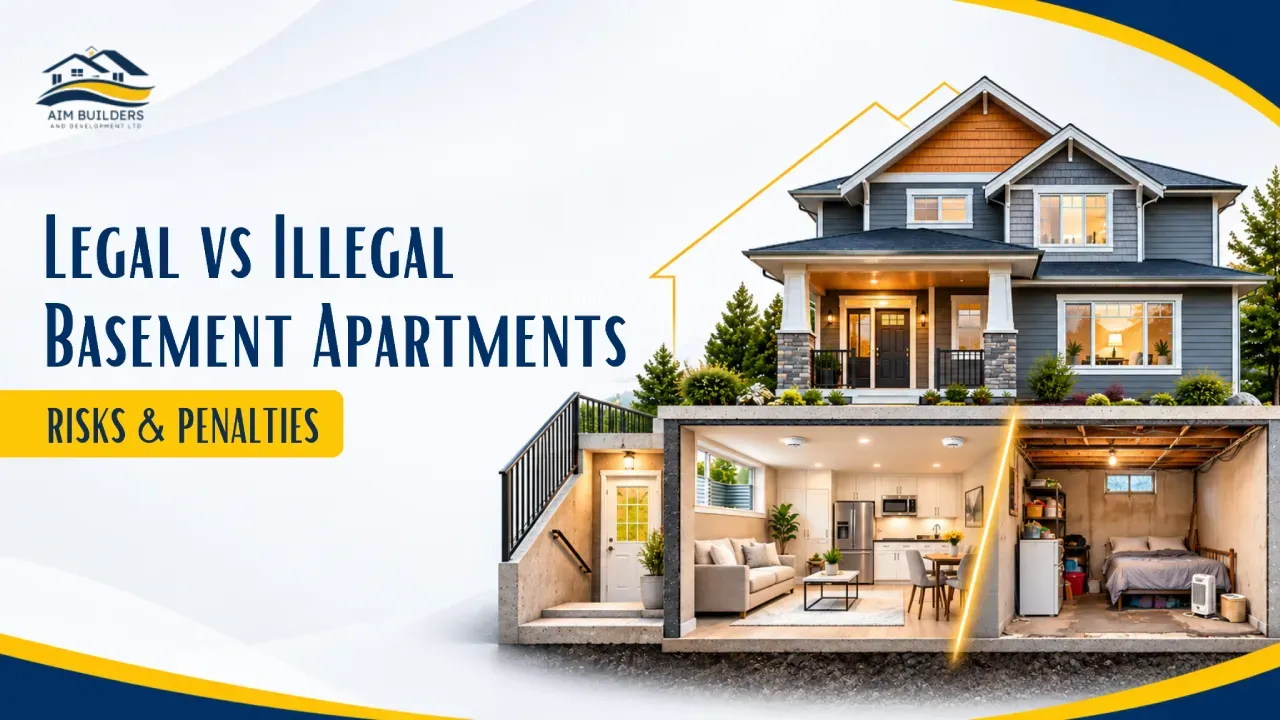
Legal vs. Illegal Basement Apartments: Risks & Penalties
Many Calgary homes have basements that were converted into separate living spaces years ago. Some were built before the current secondary suite approval process, while others were developed without the required permits.
Basement apartments that don't meet these requirements may be considered illegal, even if they have been occupied for years. This can create problems for homeowners, including required upgrades, enforcement action and financial penalties.
In this guide, we explain the difference between legal and illegal basement apartments in Calgary, the requirements property owners need to meet, the risks of operating an unapproved suite and how basement renovation contractors can help legalize an existing basement apartment.
What Is the Difference Between a Basement Suite and a Secondary Suite?
A secondary suite is a self-contained additional living space located on the same property as a primary home. It can be built in the basement, above a detached garage or in a separate backyard building. A basement suite is a specific type of secondary suite located within the basement of the main house.
In simple terms, all basement suites are secondary suites, but not all secondary suites are basement suites. A finished basement with an extra bedroom or family room does not automatically qualify as a secondary suite. It must have separate living facilities and meet the City of Calgary's approval and safety requirements.
What Is the Difference Between a Legal and Illegal Basement Apartment?
The main difference between a legal and illegal basement apartment is whether it has received the necessary City approvals and meets the applicable safety requirements. Here’s the difference between a legal and illegal basement apartment:
| Comparison |
Legal Basement Apartment |
Illegal Basement Apartment |
| Permits |
Has the required building permit and development approval, where applicable. |
Was built or converted without the required permits. |
| City approval |
Meets applicable zoning rules and has completed the required approval process. |
Has not received the necessary City approvals. |
| Safety standards |
Meets applicable building, fire and life-safety requirements. |
May have issues with fire separation, emergency exits or other safety features. |
| Inspections |
Has passed the required inspections. |
May have uninspected or unapproved construction. |
| Registration |
It is listed on Calgary's Secondary Suite Registry. |
Is not registered with the City as an approved secondary suite. |
| Rental use |
Can be rented as an approved secondary suite, subject to applicable rental requirements. |
Cannot be assumed to be an approved rental suite simply because it is occupied or has tenants. |
Note: An unregistered basement apartment may still be eligible for legalization. Homeowners can apply for the required permits, complete necessary upgrades and arrange inspections to bring an existing suite into compliance.
Get Your Basement Suite Up to Code
Planning upgrades to meet Calgary's secondary suite requirements? Let's discuss the work your basement needs.
Get a Basement Quote
What Makes a Basement Suite Legal in Calgary?
Before renting out a basement, homeowners need to understand the main requirements for a legal secondary suite. The City of Calgary reviews several aspects of the property to make sure the space is safe and suitable for separate living. Some of the key requirements include:
1. Required Permits and Approvals
Property owners must obtain the necessary permits before creating a secondary suite. A building permit is required for a new secondary suite to ensure the construction meets building safety standards. Depending on the property's land-use district and the proposed work, you may also need a development permit.
Separate electrical and plumbing permits are required when the project involves new electrical installations, renovations or changes to existing plumbing systems.
If you already have a basement apartment, you may still need a building permit to legalize it. The City requires approval even if you do not intend to rent out the space. Property owners can check the City of Calgary's secondary suite requirements before starting construction.
2. Proper Fire and Smoke Separation
Fire and smoke separation is one of the most important requirements for a legal basement apartment. The suite needs proper smoke-tight separation between the basement and the main home to slow the spread of smoke and fire.
Calgary's requirements include a smoke-tight separation between the two living spaces. This generally involves at least 12.7 mm (½ inch) drywall on the ceiling and both sides of the wall studs separating the units. Drywall joints and relevant openings must also be properly sealed.
The mechanical room may have additional separation requirements. Simply adding a layer of regular drywall without following the required installation standards may not be enough.
3. Bedroom Egress Windows
Every basement bedroom must have an operable window that meets emergency escape requirements. The window opening must be at least 0.35 square meters, with no dimension smaller than 380 mm. Properly installed smoke and carbon monoxide alarms are also required.
Homeowners planning basement renovations in Calgary should check the existing bedroom windows before finalizing their layout. Enlarging a window or changing the window well may be necessary to meet the requirements.
4. Separate Entrance and Living Facilities
A basement suite must function as an independent living space. It needs to have:
- Separate cooking facilities and a kitchen sink.
- A separate bathroom with a toilet and bathtub or shower.
- Sleeping and living areas.
- An entrance accessible from outside without passing through the main dwelling.
A shared exterior stairwell is acceptable as long as each unit has a private entrance. Homeowners can review the City of Calgary's secondary suite requirements before planning a new apartment or upgrading an existing one.
5. Heating, Ventilation and Plumbing
A basement apartment needs proper heating and ventilation to keep the living space comfortable and maintain good indoor air quality.
Under Alberta's building code, new secondary suites generally require independent heating and ventilation systems, with separate ductwork. This can be done with a separate furnace or another approved heating arrangement, along with an independent ventilation system.
However, the same arrangement does not necessarily apply to older apartments. Calgary allows certain pre-existing secondary suites to use one heating and ventilation system for both the basement and main home, provided they meet the applicable requirements.
Homeowners should also consider plumbing and electrical requirements. The basement must have a reliable hot water supply, suitable bathroom and kitchen plumbing, and electrical systems that meet the required safety standards. Any new furnace, ventilation equipment or related work may also require a mechanical permit.
The requirements depend on when the apartment was built and the type of work being completed. Homeowners should check the City of Calgary's secondary suite requirements before making changes.
What Makes a Basement Apartment Illegal in Calgary?
A basement suite in Calgary may be considered illegal if it lacks official City of Calgary approval or fails to meet municipal and provincial safety standards.
Some homeowners create rental spaces without realizing that separate living facilities also bring additional building and permit requirements. Here are some common reasons a basement suite in Calgary may not meet the City's requirements.
1. Converting a Single-Family Basement Into a Rental Unit Without Approval
A homeowner may initially finish the basement for personal use and later decide to rent it out. However, converting that space into a separate living unit can trigger additional permit and safety requirements. An existing basement renovation approval does not automatically cover its use as a secondary suite.
2. Making Changes That Were Never Approved
Some homeowners modify their basement after receiving the original permits. For example, they may add another bedroom, relocate the kitchen or change the entrance without getting the necessary approval. These changes can affect the approved layout and may require further permits or inspections.
3. Renting Out a Suite Before Final Approval
A homeowner might receive a building permit and start renting the basement before completing all required inspections. However, an active permit does not mean the suite is approved for occupancy as a secondary suite. The required work and inspections must be completed.
4. Continuing to Use a Suite After a City Compliance Order
If the City identifies problems with an unapproved or unsafe suite, it may issue an order requiring the homeowner to correct the violations. Continuing to use the space as a rental unit without addressing the issues can lead to further enforcement action.
5. Failure to Complete Required Inspections
Getting a permit does not mean the suite is automatically approved. The construction work must pass the required inspections. If a homeowner skips inspections or makes unapproved changes, the suite may remain unapproved even after the renovation is finished.
6. Inadequate Bedroom Windows
A bedroom window that is too small or cannot open properly may not meet emergency escape requirements. This is particularly common in older homes where basement windows were originally designed for ventilation and natural light rather than emergency exits.
7. Unapproved Electrical and Plumbing Work
Installing a kitchen, bathroom or additional electrical outlets can involve changes to existing systems. If you complete this work without the required permits and inspections, it may create safety concerns and prevent the suite from receiving approval.
Risks and Penalties of Having an Illegal Basement Apartment
Operating an unapproved basement can create problems that go beyond permit issues. Property owners may face unexpected expenses, safety concerns and difficulties when renting or selling their property.
1. Fines and Legal Action
The City of Calgary can investigate complaints about illegal or unsafe basement suites. If an owner fails to meet minimum safety requirements or comply with an order, the City may take legal action.
Calgary's Suite Registry By-law 11M2018 also sets penalties for registration-related offences. For example, failing to register a suite can carry a minimum penalty of $200 and a specified penalty of $1,000. Advertising or offering an unregistered suite for rent can result in a minimum penalty of $500 and a specified penalty of $1,000. Providing false or misleading registration information carries the same penalties.
However, these are maximum penalty limits, not automatic fines for every illegal basement apartment. The amount depends on factors such as the seriousness of the violation, the risk to occupants and the owner's compliance history.
2. Required Repairs or Removal of the Suite
If an inspection identifies safety or construction problems, the homeowner may need to complete repairs or upgrades before the suite can be approved. Issues with fire separation, electrical work, plumbing or emergency exits can require significant changes.
If the suite cannot or will not be brought into compliance, the owner may have to stop using it as a separate rental unit.
3. Insurance and Liability Problems
An unapproved basement apartment can complicate home insurance coverage, particularly if the insurer was not informed about the rental arrangement or renovations. A claim involving damage or an accident may receive additional scrutiny if the property does not meet safety requirements.
Homeowners may also face liability if a tenant is injured because of unsafe conditions, such as inadequate emergency exits or faulty electrical work.
4. Rental Income and Property Value Concerns
An illegal suite can create complications when selling or refinancing a property. Buyers, lenders and insurers may ask for permit records and proof that the basement apartment is approved.
An unregistered rental space may also make it harder to present the suite as a reliable source of rental income. A properly developed and registered suite provides greater confidence for future owners and tenants. Read our guide on how basement development can add value to your Calgary home.
How to Legalize an Existing Basement Suite in Calgary?
Homeowners with an existing unregistered basement apartment can apply to legalize it. Calgary provides a process for property owners to bring existing suites up to the required safety standards. Here are the main steps involved:
1. Check the Existing Permit and Registration Status
Start by checking whether the basement apartment has already received the necessary approvals. You can use the City of Calgary's Secondary Suite Registry to check registered suites.
If your property does not appear in the registry, contact the City to confirm its permit history and find out what is needed to legalize it.
2. Review the Property Requirements
Check the property's land use district and identify the permits required for the existing suite. You may need a building permit and, depending on the property, a development permit.
Electrical and plumbing permits may also be required if you have made changes to these systems.
3. Prepare the Application
The City provides different application options for existing secondary suites. Eligible existing suites may allow homeowners to use reduced application requirements. This option generally involves submitting:
- An owner declaration form
- An existing secondary suite information sheet
- Colour photographs of the suite, entrance, kitchen, bathroom, bedroom windows, parking area and outdoor space
Other suites may require full plans, including site plans, floor plans and exterior elevations.
4. Complete the Required Upgrades
After reviewing the application, the City may identify areas that need improvement before approving the suite.
Depending on the existing layout, this may involve updating smoke separation, bedroom windows, plumbing, electrical systems or other safety features.
5. Arrange the Required Inspections
Once the permitted work is completed, the homeowner must arrange the required inspections.
Calgary generally requires a framing or rough-in inspection and a final inspection for secondary suites. Separate trade inspections may also be required for electrical and plumbing work.
6. Get the Suite Registered
After the required permits and inspections are complete, Calgary adds the approved suite to its Secondary Suite Registry.
Registration helps tenants and future buyers verify that the suite has completed the City's approval process.
Make Your Basement Ready for Rental
Talk to our team about the construction work needed to prepare your basement for tenants.
Discuss Your Basement Project
Calgary's Secondary Suite Amnesty Program
Calgary property owners with an older, unregistered basement apartment may save on approval costs through the Secondary Suite Amnesty Program.
The program is available for eligible suites built before March 12, 2018, and runs until December 31, 2026. Eligible homeowners may benefit from:
- Waived development permit charges.
- Waived secondary suite registration fees.
- Reduced building code requirements for qualifying older suites.
Homeowners who apply and qualify can have their development permit charges and secondary suite registration fees waived. They may also qualify for reduced building code requirements when upgrading an existing suite.
However, the program does not remove the need to meet minimum life-safety standards. Property owners must still obtain the required permits, complete necessary safety improvements and pass the required inspections before their suite can be approved.
The amnesty program can make legalizing an older basement apartment more affordable. If you're planning a basement renovation, check your eligibility before you start.
For more information about basement development costs, legal suite requirements and available financial assistance, read our guide to Calgary basement development in 2026.
Should You Hire Basement Renovation Contractors to Legalize Your Suite?
Legalizing an existing basement apartment may require more than cosmetic improvements. Homeowners might need to change the layout, install suitable bedroom windows, improve fire separation or update electrical and plumbing systems.
Experienced basement renovation contractors can assess the space, identify needed construction work and help coordinate improvements. Professional basement builders in Calgary can also help plan the development around the property's requirements.
Before hiring a contractor, read our guide on questions to ask when choosing a home renovation company in Calgary to help you make an informed decision.
Conclusion
An unregistered basement apartment doesn't always mean starting the development over. In many cases, homeowners can keep the existing layout and make the changes needed to meet Calgary's secondary suite requirements. Work may include upgrading bedroom windows, improving fire separation or correcting previous electrical and plumbing installations.
Before making major changes, find out what your existing suite is missing and which upgrades the City requires.
If your existing basement needs changes to meet the City's requirements, AIM Builders can help with basement development services in Calgary. We work with homeowners to improve their basement spaces and make them more practical for everyday use.
Frequently Asked Questions
Yes, but not having a tenant does not automatically exempt the suite from permit requirements. If the basement has cooking facilities, a bathroom and a separate entrance, the City may require the necessary secondary suite permits even if you use it for family members.
You can use the City's Secondary Suite Registry to check whether a basement apartment is registered. Registered suites have completed the required approval process and inspections.
Yes. Homeowners can apply to legalize an existing suite by submitting the required documents, obtaining permits and completing necessary safety upgrades. Older suites may qualify for Calgary's Secondary Suite Amnesty Program.
No. The age of a basement suite does not automatically make it legal. Property owners need to check its permit history and whether it meets the applicable safety requirements. Some older suites may qualify for reduced requirements under the City's amnesty program.
If a basement suite does not meet the applicable building or safety requirements, the homeowner may need to complete repairs or upgrades before receiving approval. The work required depends on the issues identified during the inspection.
About the Author
Inderpal Singh is the founder of Aim Builders, a Calgary-based renovation company specializing in basement development and home renovation services. With years of experience in the construction industry, he helps homeowners transform their spaces with quality work, practical design, and project management you can trust.